
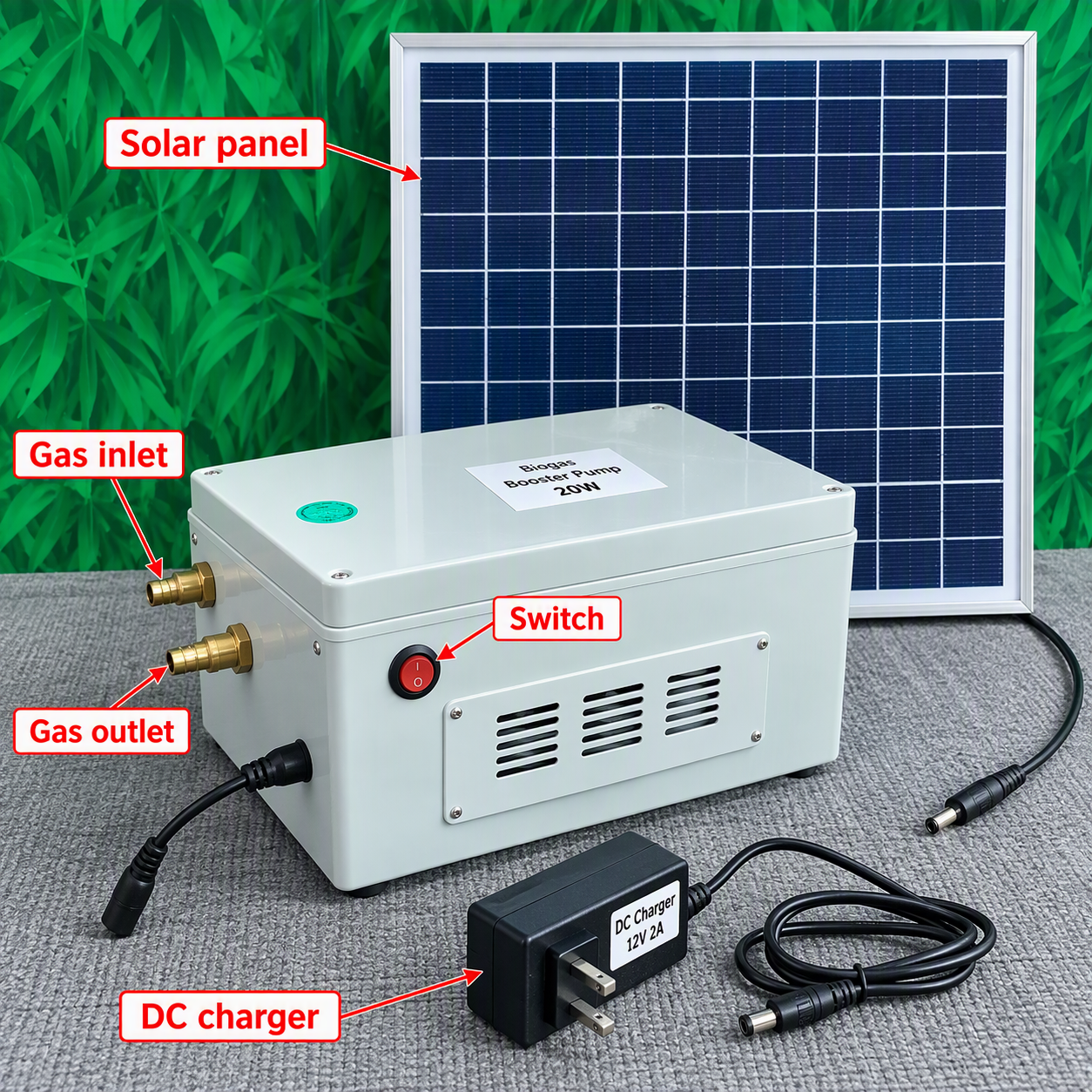
Key Features of Solar Biogas Booster Pump
- Solar-Powered Operation: Operates using a compatible solar power system.
- Gas Pressure Boosting: Helps increase biogas pressure to support compatible appliances.
- Improved Gas Flow: Facilitates the movement of biogas through pipelines and gas distribution systems.
- Off-Grid Compatibility: Suitable for rural homes, farms, and locations with limited electricity access.
- Energy Efficiency: Can reduce dependence on grid electricity when appropriately configured.
- Compact Design: Depending on the model, can be installed near the biogas plant, gas storage bag, or gas supply line.
- Flexible Applications: Suitable for appropriately sized household, agricultural, and small commercial biogas systems.
- Optional Battery Operation: Selected models may support battery power for operation when solar energy is insufficient.
- Biogas-Compatible Construction: Must have gas-compatible materials, seals, and components suitable for combustible biogas.
Functions of Solar Biogas Booster Pump
- Boosts biogas pressure when the available pressure is insufficient for the intended application.
- Helps transfer biogas from a digester or gas storage bag to connected appliances.
- Supports gas distribution through properly designed biogas pipelines.
- Uses solar-generated electricity to power the pump motor.
- Helps maintain an adequate gas supply to compatible appliances when correctly sized.
- Supports the use of biogas for cooking, water heating, poultry brooding, and other suitable applications.
Benefits of Solar Biogas Booster Pump
- Reduced Electricity Costs: Can lower dependence on mains electricity through solar-powered operation.
- Improved Gas Utilization: Helps make stored biogas available to appliances that require higher inlet pressure.
- Renewable Energy Integration: Combines biogas utilization with solar energy.
- Off-Grid Convenience: Provides a potential solution for farms and rural installations without reliable electricity.
- Versatile Use: Can support different biogas applications, subject to pump capacity and pressure requirements.
- Potentially Lower Operating Costs: Solar operation may reduce electricity expenses, depending on system sizing and usage.
- Better System Performance: Proper pressure boosting can help address low-pressure problems in compatible biogas installations.
Typical Applications
- Household biogas cooking systems.
- Farms and livestock facilities.
- Biogas-powered water heaters.
- Poultry brooding and heating systems using compatible equipment.
- Biogas storage bags and distribution pipelines.
- Rural and off-grid biogas installations.
- Small commercial and institutional biogas systems where pump capacity is sufficient.
Installation and Maintenance
- Install the pump according to the manufacturer’s instructions.
- Use a solar panel, controller, and battery only if compatible with the pump’s electrical requirements.
- Ensure all gas connections are properly sealed and leak-tested.
- Check the rated gas flow, inlet pressure, outlet pressure, and power requirements before installation.
- Inspect connections, seals, wiring, and other components periodically.
- Keep the pump within the manufacturer’s specified operating limits.
Important Safety Information
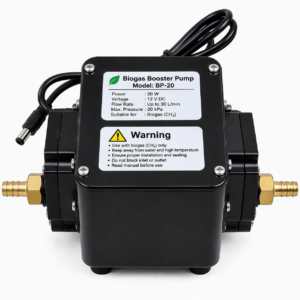
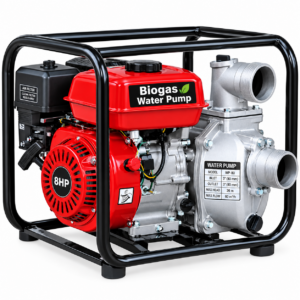
Use only a pump specifically designed and approved for combustible biogas. Ordinary water pumps and unapproved air pumps must not be used to transfer biogas. Ensure appropriate gas-leak prevention, pressure regulation, electrical protection, and ignition-risk controls. Install and maintain the equipment in accordance with the manufacturer’s instructions and applicable safety requirements.
Important Technical Specifications to Confirm
- Rated power (W).
- Operating voltage (V).
- Compatible solar panel rating.
- Battery requirements, if applicable.
- Gas flow rate (L/min or m³/h).
- Maximum outlet pressure and pressure differential.
- Inlet and outlet connection sizes.
- Compatible gas composition.
- Product dimensions and weight.
- Warranty and after-sales support.
Reviews
There are no reviews yet.