
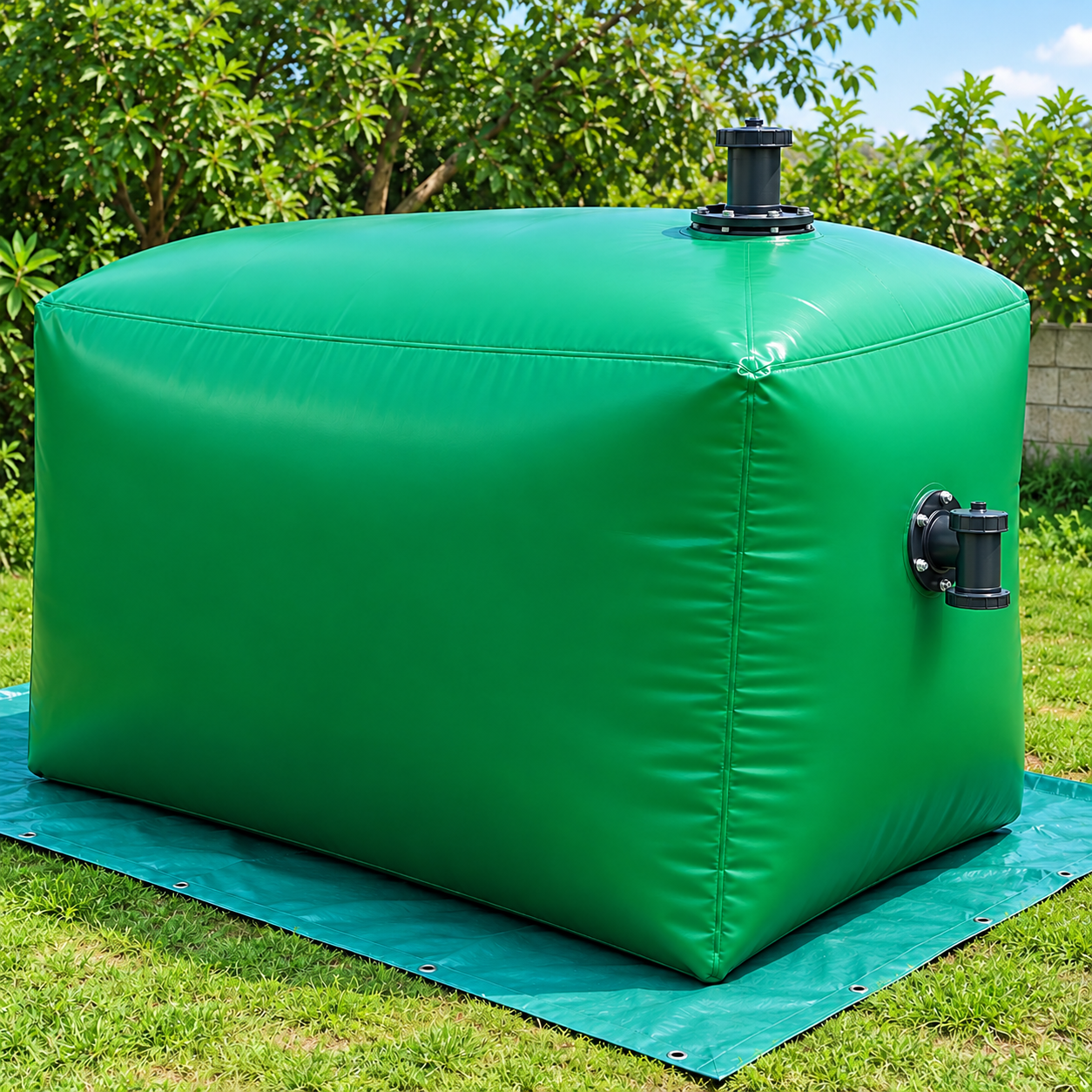
Key Features
- Storage capacities from 6 m³ & 8 m³.
- Reinforced red mud material construction.
- Flexible and high-capacity design.
- Gas-tight construction.
- Suitable for medium- and large-scale biogas systems.
- High flexibility for different installation configurations.
- Designed for temporary or buffer gas storage.
- Helps accommodate fluctuations in gas production and consumption.
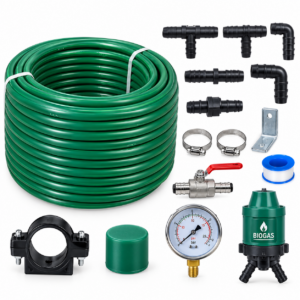
- Easy connection to biogas pipelines.
- Available in multiple sizes.
- Can be used with digesters, gas upgrading systems and biogas distribution systems.
- Relatively simple installation compared with rigid gas storage structures.
Functions
- Stores excess biogas produced by the digester.
- Provides buffer storage between production and consumption.
- Supplies stored biogas during periods of increased demand.
- Helps maintain a more consistent gas supply.
- Reduces loss or flaring of unused biogas where appropriate.
- Provides additional storage capacity for large biogas plants.
- Supports biogas distribution to multiple appliances or equipment.
- Can be integrated with gas pressure regulation and monitoring systems.
Benefits
- Large storage capacity for medium- and large-scale systems.
- Helps maximize utilization of biogas produced.
- Balances variations between gas production and consumption.
- Flexible alternative to fixed gas holders.
- Easier to expand storage capacity by adding additional units where appropriate.
- Suitable for agricultural and commercial biogas projects.
- Helps provide gas during peak-demand periods.
- Can reduce wastage of surplus biogas.
- Efficient use of available installation space.
- Supports reliable biogas supply to downstream equipment.
Typical Applications
- Large agricultural biogas plants.
- Dairy and livestock farms.
- Pig and poultry farms.
- Food-processing facilities.
- Commercial biogas plants.
- Institutional biogas systems.
- Wastewater treatment plants.
- Municipal and organic-waste digesters.
- Industrial anaerobic digestion systems.
- Biogas generators and CHP systems.
- Biogas boilers and industrial burners.
- Biogas upgrading and purification systems.
- Centralized biogas storage and distribution.
How It Works
Biogas produced by an anaerobic digester is directed through a gas pipeline into the storage bag. As biogas enters, the flexible bag expands and stores the gas.
When gas is required, biogas is drawn from the storage bag through the outlet connection and supplied to appliances, generators, boilers or other downstream equipment.
The storage bag therefore acts as a buffer between biogas production and consumption, allowing gas produced during periods of low demand to be stored and used later.
Available Capacities
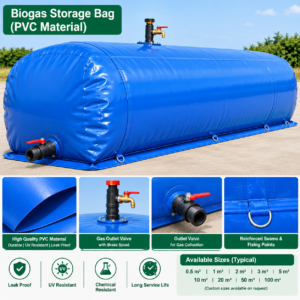
- 6 m³
- 8 m³
Installation & Safety
The storage bag should be installed on a suitable, smooth and level surface free from sharp objects and conditions that could damage the material. It should be protected from excessive heat, fire, mechanical damage and unauthorized access.
Use suitable biogas-rated valves, pipes, connectors, pressure regulators and safety devices. The storage bag must not be operated above its specified pressure or temperature limits.
For large installations, appropriate ventilation, gas detection, pressure protection and methane-safety measures should be incorporated into the overall system design.
Recommended System
Anaerobic Digester → Gas Pipeline → Red Mud Reinforced Storage Bag → Pressure Regulation → Biogas Appliances / Generator / Boiler
Reviews
There are no reviews yet.