
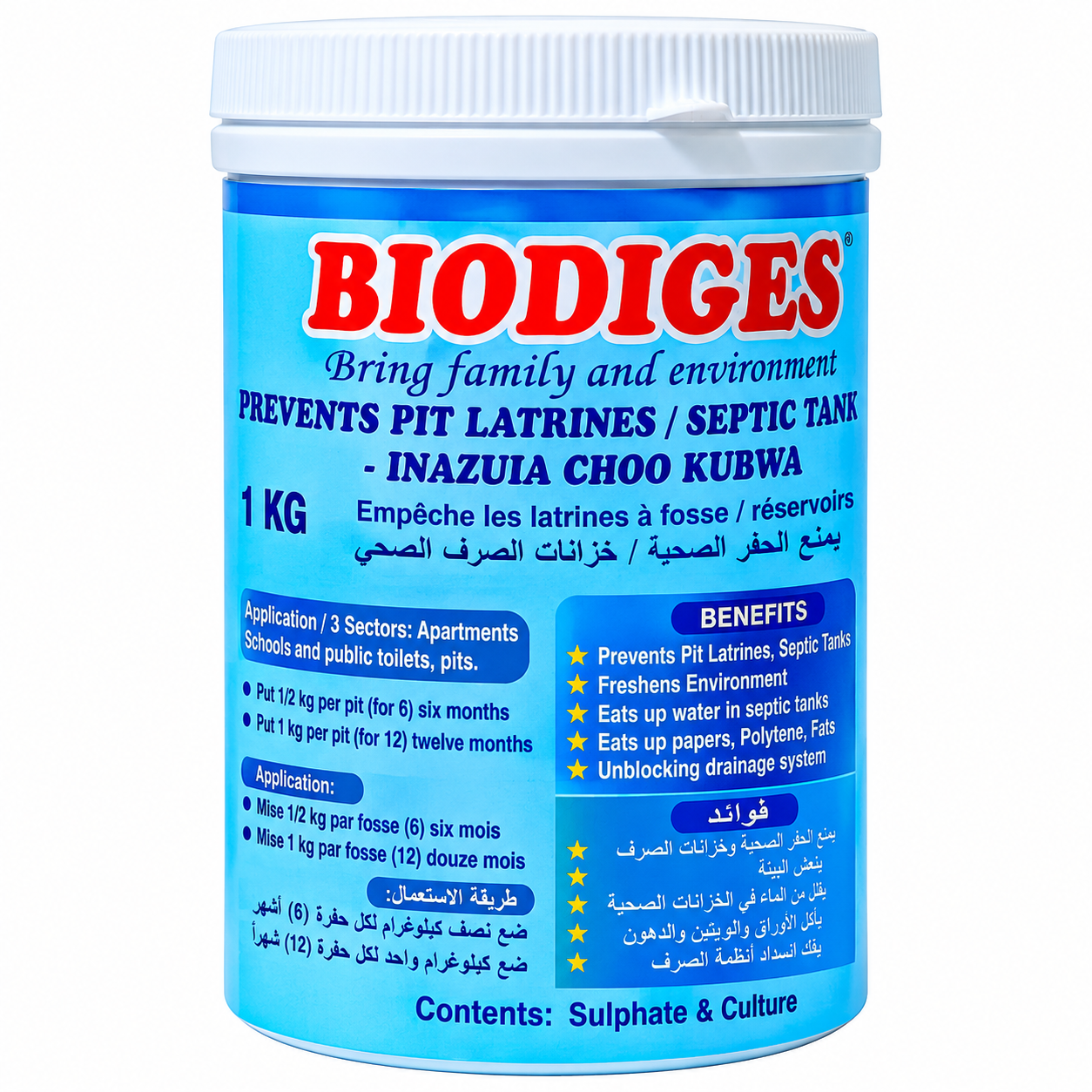
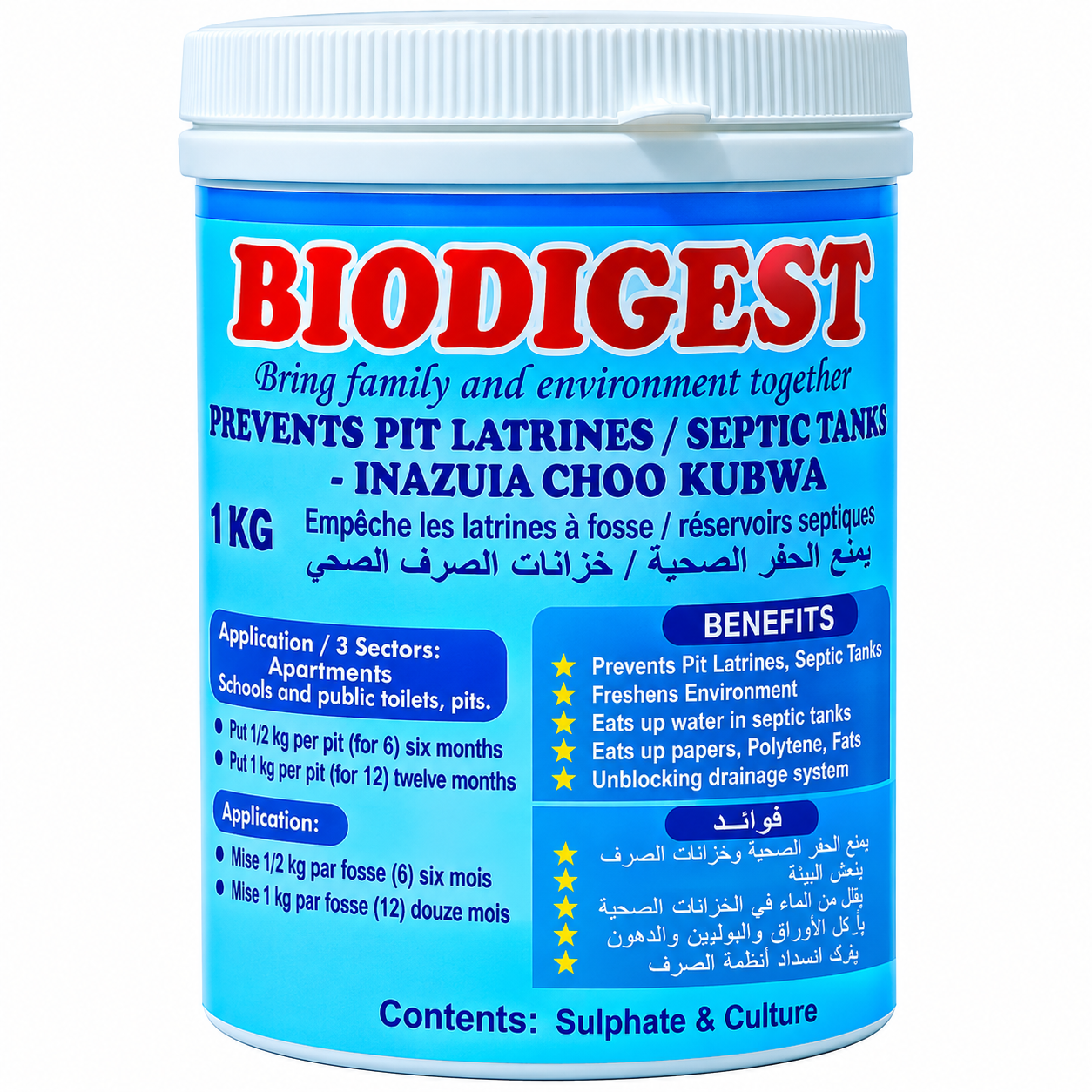
Key Features
- Beneficial Microorganisms: Contains selected bacteria that support the natural decomposition of organic waste.
- Natural Enzyme Formulation: May contain protease, lipase, amylase and cellulase enzymes that help break down different organic materials.
- Odour Control: Helps reduce unpleasant smells associated with decomposing organic waste.
- Sludge Reduction: Supports the breakdown of accumulated biodegradable solids in septic tanks and pit latrines.
- Waste Decomposition: Helps accelerate the biological digestion of human waste and other organic matter.
- Drainage Support: Certain formulations help break down organic materials responsible for blockages in drainage pipes.
- Easy Application: Available in powder, granules and liquid formulations for convenient application.
- Environmentally Friendly: Biological formulations offer an alternative to harsh chemical treatments.
- Multiple Applications: Suitable for pit latrines, septic tanks, biodigesters and selected wastewater treatment systems.
Functions
Biodigester enzymes perform several important functions in sanitation and waste management systems.
a) Breakdown of Human Waste
The enzymes help break down complex organic materials in human waste into simpler compounds that microorganisms can digest.
b) Reduction of Sludge Accumulation
Beneficial bacteria digest biodegradable organic solids, helping reduce sludge accumulation and improve the efficiency of waste treatment systems.
c) Elimination of Unpleasant Odours
The biological activity helps break down organic substances responsible for foul smells, improving sanitation conditions.
d) Decomposition of Organic Materials
Different enzymes target different organic substances:
- Protease: Breaks down proteins.
- Lipase: Breaks down fats and oils.
- Amylase: Breaks down starch.
- Cellulase: Helps break down cellulose and fibrous organic materials.
e) Supporting Biodigester Performance
The introduction of suitable microbial cultures can help replenish beneficial microorganisms and support biological activity in biodigester systems.
Benefits of Biodigester Enzymes
- Helps reduce the accumulation of organic waste in pit latrines and septic tanks.
- Reduces unpleasant odours from sanitation facilities.
- Supports natural waste decomposition.
- Helps minimise sludge build-up when used correctly.
- May reduce the frequency of septic tank emptying, depending on system conditions.
- Supports healthy microbial activity in biodigesters.
- Helps maintain efficient wastewater treatment processes.
- Provides an environmentally friendly approach to organic waste management.
- Helps reduce organic blockages in suitable drainage systems.
- Offers a convenient and economical sanitation maintenance solution.
Typical Applications
Biodigester enzymes can be used in several sanitation and wastewater management applications.
How Biodigester Enzymes Work
Biodigester enzymes work through a natural biological decomposition process involving enzymes and microorganisms.
The process generally involves the following stages:
Stage 1: Application
The enzyme and bacterial formulation is introduced into the pit latrine, septic tank or biodigester according to the manufacturer’s recommended dosage.
Stage 2: Activation
The beneficial microorganisms become active under suitable environmental conditions, including appropriate moisture, temperature and pH.
Stage 3: Organic Waste Breakdown
Enzymes break down complex organic substances into smaller compounds that microorganisms can utilise.
Stage 4: Biological Digestion
Microorganisms consume the biodegradable materials and convert them into simpler products. In anaerobic systems, this process can produce methane, carbon dioxide and stabilised residual solids.
Stage 5: Improved Waste Management
Continuous biological activity supports waste decomposition, helping manage sludge accumulation and unpleasant odours.
Available Formulations
Biodigester enzymes are commonly available in different formulations:
Powder Form
- Easy to measure and store.
- Usually mixed with water before application.
- Suitable for septic tanks and pit latrines.
Granular Form
- Convenient for controlled application.
- Can be introduced directly or dissolved in water, depending on manufacturer instructions.
- Suitable for routine sanitation maintenance.
Liquid Form
- Ready for dilution or direct application, depending on concentration.
- Convenient for dosing into sanitation systems.
- Suitable for pit latrines, biodigesters and selected wastewater treatment applications.
Application and Maintenance Guidelines
For effective results, biodigester enzymes should be applied according to the manufacturer’s instructions.
General recommendations include:
- Follow the recommended dosage based on the product formulation and waste system capacity.
- Introduce the treatment through the toilet or designated access point, as instructed.
- Avoid mixing biological treatments with strong disinfectants, bleach, acids or other chemicals that may destroy beneficial microorganisms.
- Maintain adequate moisture levels within the sanitation system.
- Apply treatments regularly according to the recommended maintenance schedule.
- Store unused products in a cool, dry place.
- Keep the product away from direct sunlight and excessive heat.
Important: Dosage requirements vary between products. Always follow the specific manufacturer’s instructions.
Important Considerations
- Biodigester enzymes work on biodegradable organic materials and cannot dissolve plastics, sanitary pads, stones, metals or other inorganic materials.
- Biological treatments do not replace proper septic tank inspection and maintenance.
- Severely blocked or structurally damaged septic systems may require professional intervention.
- Enzyme treatments should not be considered a guaranteed replacement for septic tank desludging.
- Only use formulations specifically designed for pit latrines, septic tanks or biodigesters.
- Products intended for aerobic wastewater treatment may not be suitable for every anaerobic biodigester.
Reviews
There are no reviews yet.