
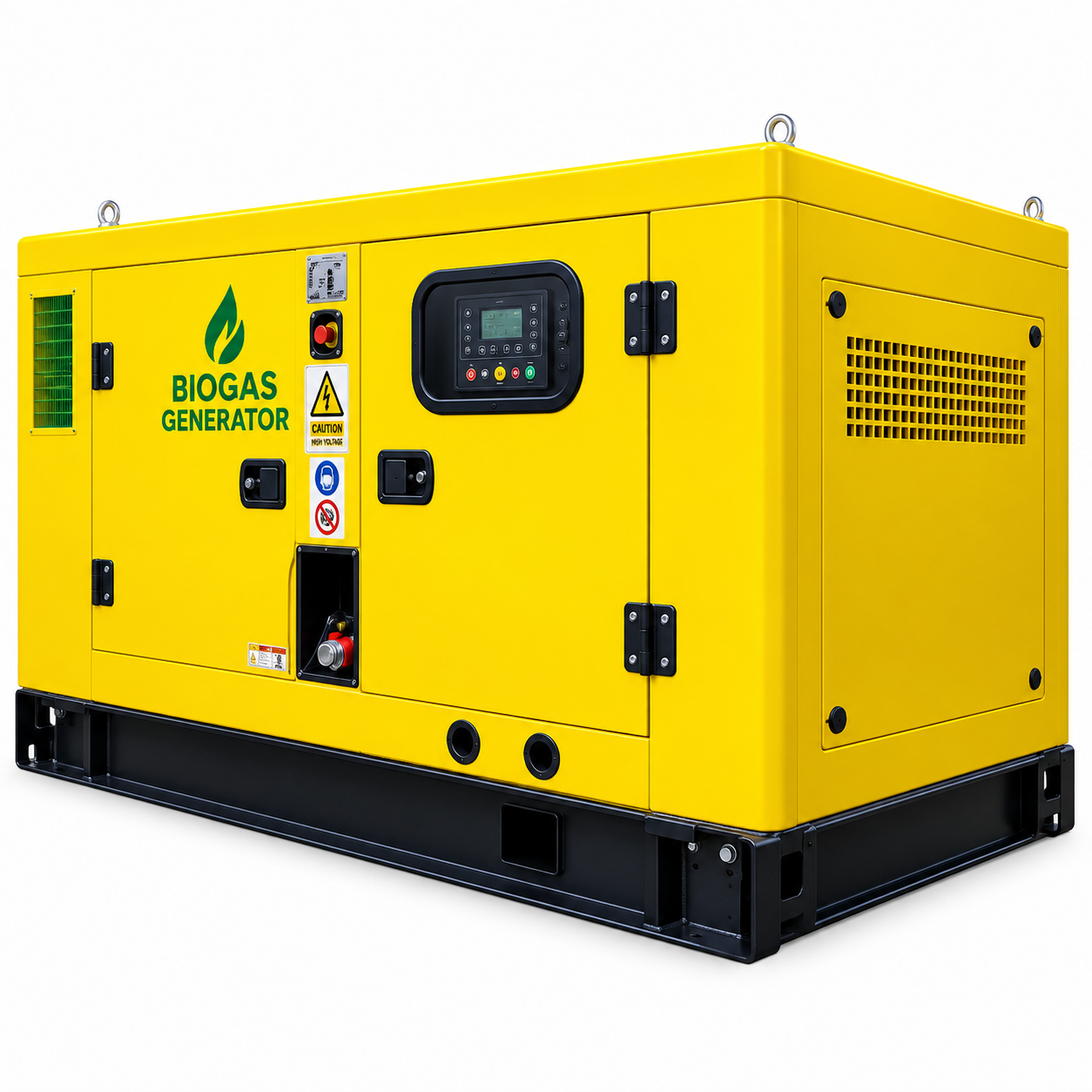
Key Features
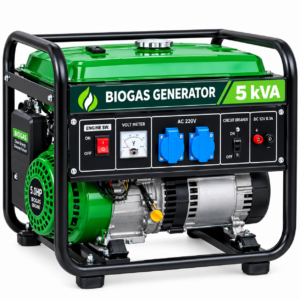
- 30 kVA Rated Capacity: Designed to supply electricity for medium-sized commercial, agricultural, and institutional applications.
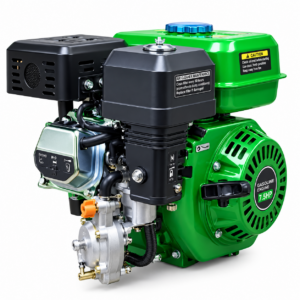
- Biogas-Powered Engine: Uses biogas as fuel to drive the generator’s engine.
- High-Performance Alternator: Converts mechanical energy from the engine into electrical power.
- Renewable Energy Operation: Utilises biogas produced from biodegradable organic waste.
- Control Panel: Allows operators to monitor and manage generator operation; available monitoring functions depend on the model.
- Protective Enclosure: Depending on the model, an enclosure can help protect internal components from environmental exposure and reduce operating noise.
- Continuous Power Potential: Suitable for extended operation when designed for the required duty cycle and supplied with sufficient biogas.
- Commercial and Agricultural Applications: Supports compatible machinery, lighting, pumps, and other electrical equipment.
- Potential Fuel Cost Savings: Can reduce reliance on conventional generator fuels when biogas is available at an economical cost.
Functions
Electricity Generation
Converts the energy stored in biogas into electrical power for operating compatible equipment and appliances.
Commercial Power Supply
Provides electricity for selected business operations, workshops, commercial facilities, and agricultural enterprises.
Agricultural Power Generation
Can supply electricity to compatible equipment used in dairy farming, poultry farming, irrigation, and other agricultural operations.
Backup Electricity
Can serve as a backup power source during grid interruptions when installed with suitable electrical switching and protection equipment.
Organic Waste-to-Energy Conversion
Enables businesses and farms to convert biogas produced from organic waste into useful electricity.
Benefits
Reduced Dependence on Diesel and Petrol
Using biogas instead of conventional generator fuels can reduce fuel expenditure, depending on gas production, treatment, and operating costs.
Potential Electricity Cost Savings
Businesses that generate sufficient biogas on-site may reduce their dependence on purchased electricity.
Productive Use of Organic Waste
The generator provides an energy application for biogas produced from livestock manure, food waste, and other suitable biodegradable materials.
Supports Business Operations
A 30 kVA generator can support multiple electrical loads when their combined demand remains within the generator’s rated capacity.
Suitable for Agricultural Enterprises
Dairy farms, poultry farms, and other agricultural businesses can integrate biogas production with electricity generation and organic waste management.
Renewable Energy Adoption
Biogas power generation can contribute to a more diversified energy supply and reduce reliance on fossil fuels.
Potential for Integrated Energy Systems
The generator can form part of a larger biogas installation supplying electricity to farm operations, processing equipment, and other compatible loads.
Typical Applications
The 30 kVA biogas generator may be suitable for:
- Dairy and livestock farms
- Poultry farms
- Agricultural processing facilities
- Food-processing businesses
- Hotels and lodges
- Commercial buildings
- Workshops and small industrial facilities
- Agricultural irrigation systems
- Institutions with suitable biogas infrastructure
- Biogas plants requiring on-site electricity generation
Actual suitability depends on the facility’s electrical demand, starting currents, operating schedule, and available biogas production.
Technical Specifications
Important: A 30 kVA rating corresponds to approximately 24 kW of real power at a power factor of 0.8. The actual usable output depends on the manufacturer’s rating, operating conditions, and load characteristics.
Biogas Supply Requirements
Before installation, confirm the following with the generator manufacturer:
- Required biogas flow rate.
- Minimum methane concentration.
- Maximum permitted hydrogen sulphide concentration.
- Required gas inlet pressure.
- Gas moisture and filtration requirements.
- Expected gas consumption at different electrical loads.
- Continuous biogas production and storage capacity.
A 30 kVA generator requires a substantially greater biogas supply than a small domestic generator. The digester and gas-treatment system must be sized accordingly.
Installation and Maintenance
- Install the generator on a stable foundation in a suitable, well-ventilated location.
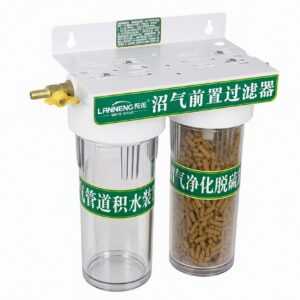
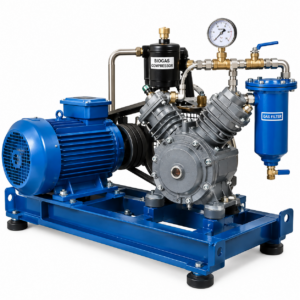
- Provide appropriate gas filtration and moisture removal.
- Ensure the gas supply meets the manufacturer’s pressure and flow requirements.
- Install suitable earthing, circuit protection, and electrical isolation.
- Ensure exhaust gases are safely discharged away from occupied areas.
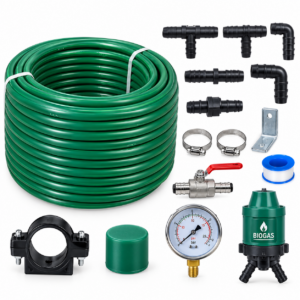
- Inspect gas lines, valves, filters, and connections regularly.
- Follow the manufacturer’s recommended engine oil changes and service intervals.
- Have the generator serviced by qualified technicians.
- Safety note: Never operate a biogas generator inside an occupied building or enclosed space. Engine exhaust contains carbon monoxide, which can be fatal. Biogas is flammable and must be handled using suitable gas piping, leak detection, ventilation, and isolation arrangements.
Reviews
There are no reviews yet.