
Product Description
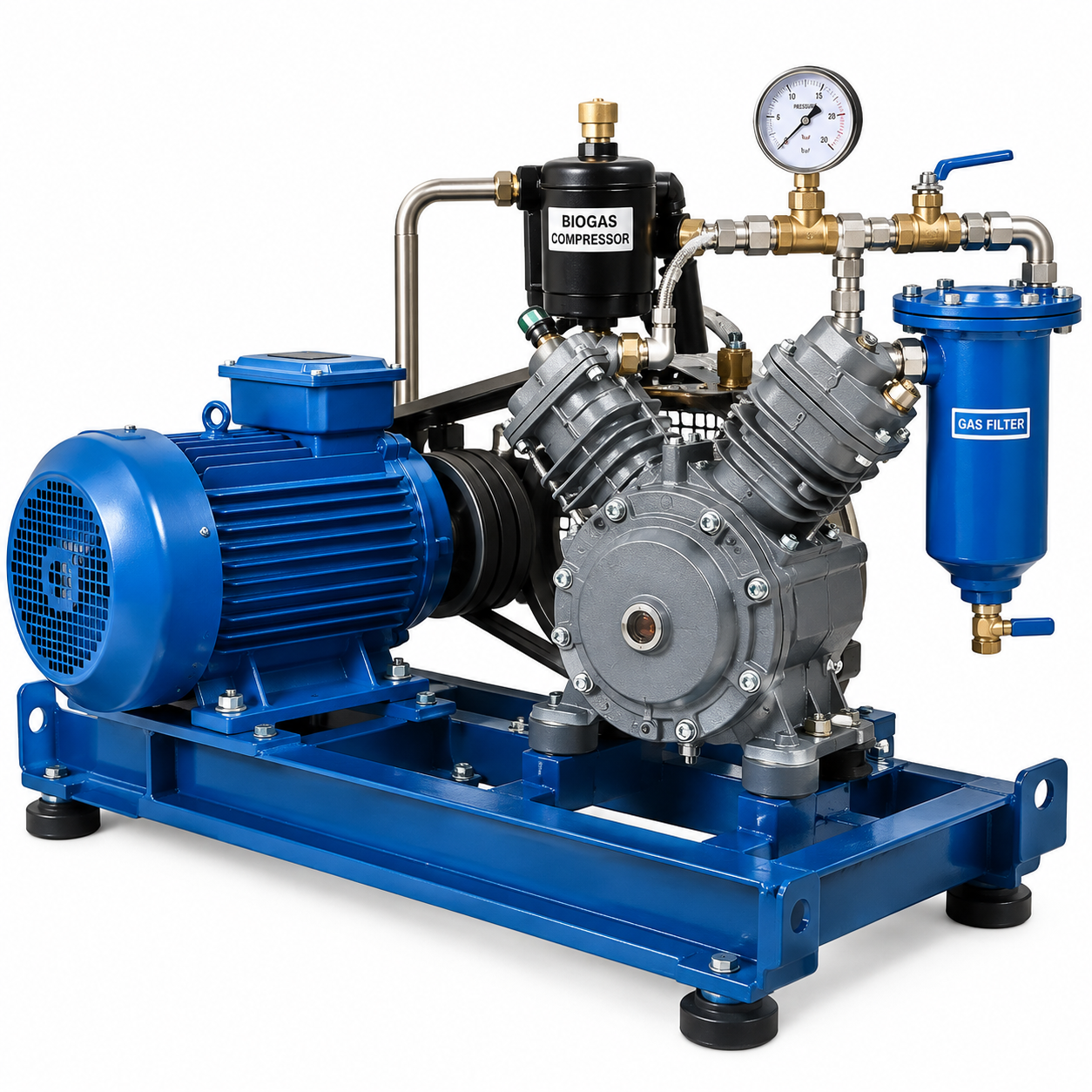
A biogas compressor is a specialised piece of equipment designed to increase the pressure of biogas for applications that require gas movement, transfer, or storage at elevated pressures. Depending on its design, it can be used to compress biogas for gas storage systems, biogas upgrading processes, and industrial applications.
Biogas compressors are used in agricultural biogas plants, commercial biodigesters, wastewater treatment facilities, and renewable energy installations. They can help move gas through treatment equipment and deliver it to systems operating at the required pressure.
Important: Biogas compressors differ in their operating pressure, flow capacity, construction materials, and compatibility with wet or corrosive gas. The correct model must be selected for the specific biogas application.
Key Features
- Biogas-compatible construction: Designed for use with biogas when specified by the manufacturer.
- Gas pressure increase: Raises gas pressure to meet the requirements of compatible downstream equipment.
- Different capacities: Available in various gas flow rates and pressure ranges.
- Continuous or intermittent operation: Depending on the compressor design and duty rating.
- Corrosion-resistant components: Suitable models use materials compatible with moisture and contaminants present in biogas.
- Flexible installation: Available for selected domestic, agricultural, and commercial applications.
- Integration with gas treatment systems: Can be incorporated into appropriately designed biogas purification and gas delivery systems.
- Pressure control and protection: Some systems include pressure switches, relief valves, and monitoring instruments.
Actual features depend on the compressor model and manufacturer.
Functions
A biogas compressor performs several important functions:
- Gas compression: Increases biogas pressure to the required operating level.
- Gas transfer: Helps move biogas between process stages or compatible storage systems.
- Gas treatment support: Supplies gas at the required pressure to certain upgrading and purification processes.
- Gas delivery: Supports applications that require a controlled supply of pressurised biogas.
- Process integration: Helps connect gas production, treatment, storage, and utilisation equipment.
Benefits
- Improves gas transfer: Helps move biogas through systems where additional pressure is required.
- Supports commercial applications: Enables selected processes that require compressed gas.
- Facilitates gas treatment: Can supply the pressure required by compatible gas purification equipment.
- Supports energy utilisation: Helps deliver biogas to suitable downstream equipment.
- Offers application flexibility: Models are available for different gas flow rates and pressure requirements.
- Supports system automation: Compatible units can operate with pressure switches and monitoring controls.
Note: A compressor does not automatically increase the energy content of biogas; it increases its pressure. Biogas upgrading is a separate process used to remove carbon dioxide and other impurities.
Typical Applications
Biogas compressors may be used in:
- Agricultural and commercial biogas plants.
- Biogas purification and upgrading systems.
- Wastewater treatment plants.
- Industrial anaerobic digestion facilities.
- Gas transfer and storage systems designed for compressed biogas.
- Renewable natural gas production processes.
- Specialised biogas utilisation systems requiring higher gas pressure.
For small domestic biodigesters, a compressor may not be necessary because many biogas appliances operate at low pressure and can use an appropriately designed gas delivery system.
How a Biogas Compressor Works
A biogas compressor draws gas from a source and uses a mechanical compression mechanism to increase its pressure.
Depending on the design, the gas may be compressed using a diaphragm, piston, rotary mechanism, or another suitable technology. The compressed gas then passes through the required downstream equipment, such as a treatment unit, storage system, or gas delivery line.
A complete installation may include:
- An inlet filter or moisture separator.
- A biogas-compatible compressor.
- Pressure gauges and control switches.
- Suitable non-return and pressure-relief valves.
- Gas treatment equipment where required.
- Compatible piping and a suitable storage or utilisation system.
The exact arrangement depends on the gas composition, required pressure, flow rate, and intended application.
Why Choose Home Biogas Kenya?
At Home Biogas Kenya, we provide biogas equipment and solutions for domestic, agricultural, institutional, and commercial applications.
Choosing the right compressor can help improve gas transfer and support biogas treatment or utilisation processes that require increased pressure.
Our team can help you identify suitable equipment based on your gas flow requirements, operating pressure, and intended application.
Contact Home Biogas Kenya to enquire about biogas compressors and compatible gas treatment equipment.

Reviews
There are no reviews yet.