
Key Features
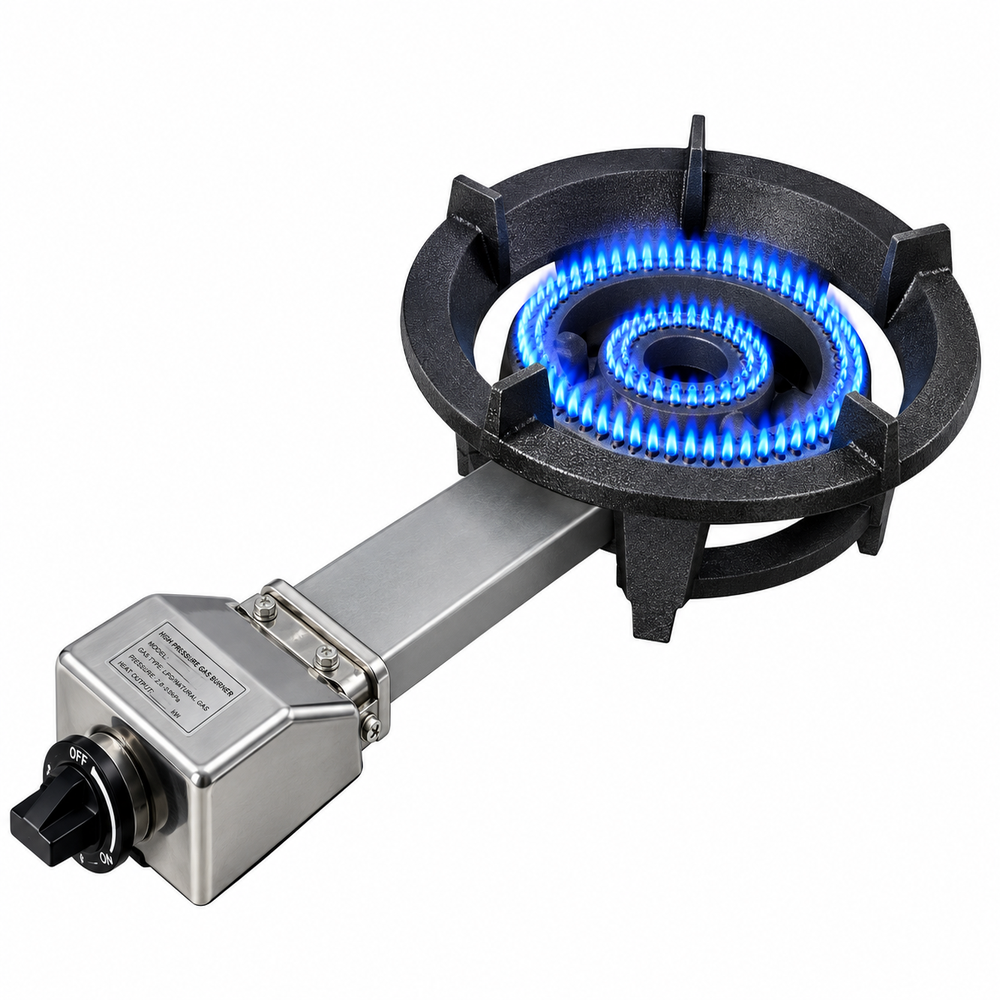
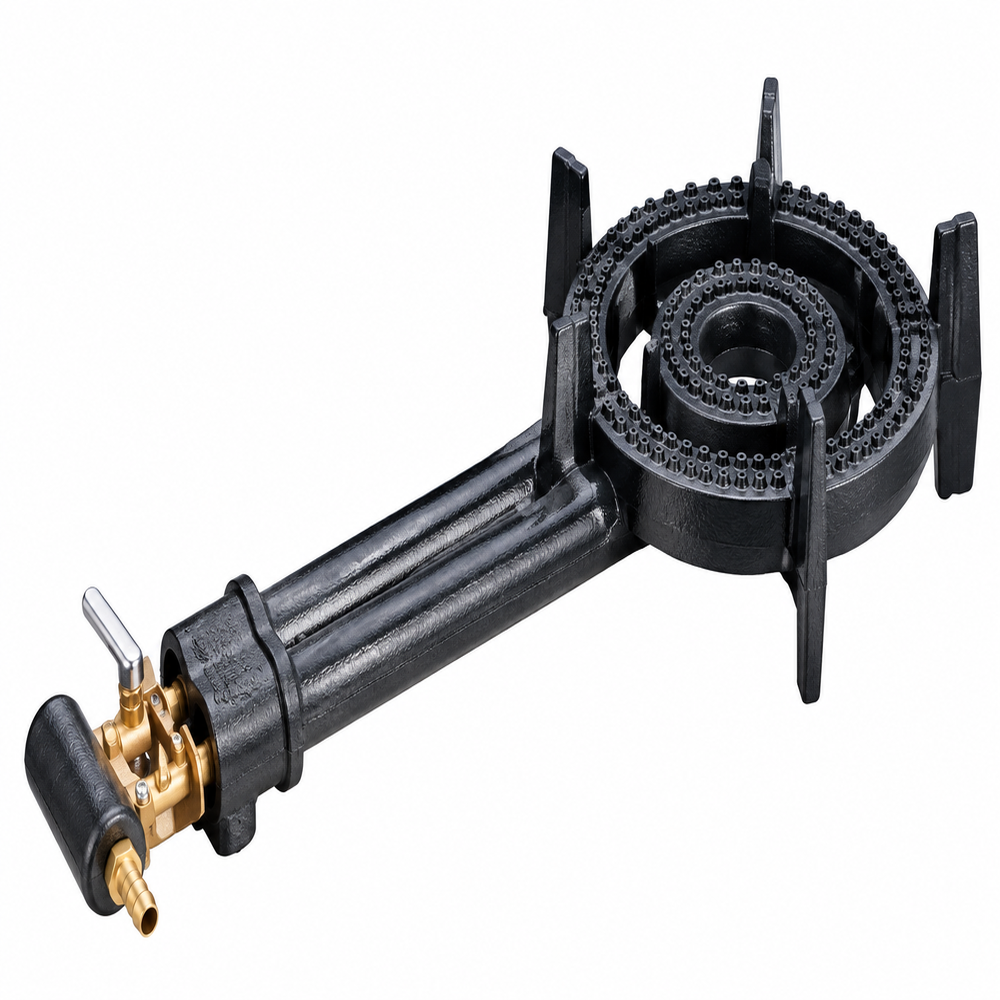
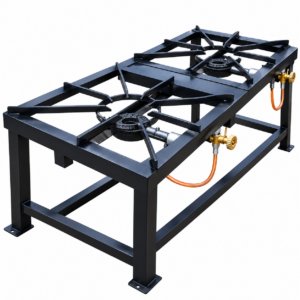
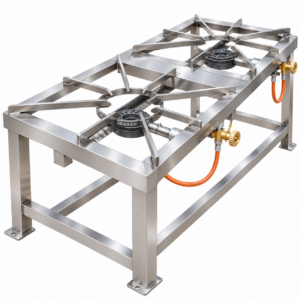
- Heavy-duty biogas burner
- Large-diameter burner head for larger cooking vessels
- Dual-ring flame pattern for broader heat distribution
- Cast-iron / heat-resistant burner construction
- Stainless-steel or metal gas-control housing
- Manual flame-control valve
- Extended mixing tube for air–biogas mixing
- Multiple flame ports for distributed combustion
- Strong pot-support structure
- Designed for high-demand cooking applications
- Suitable for fixed installation or integration into institutional cooking equipment
- Simple mechanical design for relatively easy maintenance
Functions
The burner converts biogas into thermal energy for:
- Large-pot cooking
- Boiling water
- Cooking ugali and other staple foods
- Preparing meat, vegetables and stews
- Frying
- Simmering
- Institutional meal preparation
- Commercial food preparation
- Heating large cooking vessels
Where It Can Be Used
This type of burner is particularly suitable for:
- Institutional Kitchens
- Schools
- Colleges
- Hospitals
- Prisons
- Boarding facilities
- Community kitchens
How It Works
The burner operates through air–biogas mixing and combustion.
- Biogas enters through the gas inlet.
- The control valve regulates the gas supply.
- Gas passes through the injector/nozzle.
- The gas jet draws primary air into the mixing tube.
- Biogas and air mix before reaching the burner head.
- The mixture exits through the burner ports.
- Ignition produces a series of flames around the burner rings.
- Heat is transferred to the cooking vessel above the burner.
Advantages
1. High Cooking Capacity
The larger burner head makes it suitable for larger pots and cooking vessels than conventional household burners.
2. Broad Heat Distribution
The concentric burner rings distribute the flame over a wider area, helping transfer heat across the base of a larger cooking vessel.
3. Heavy-Duty Construction
The robust burner structure is intended for applications where the appliance may experience frequent cooking and higher thermal loads.
4. Suitable for Renewable Cooking Energy
It enables farms, institutions and businesses to convert biogas generated from organic waste into useful cooking energy.
5. Reduced Dependence on Conventional Fuels
Where adequate biogas is available, the burner can provide an alternative or supplementary cooking-energy source.
6. Simple Operation
The manual control valve provides straightforward adjustment of the gas flow and cooking intensity.
7. Suitable for Large Biogas Systems
Commercial burners generally require substantially more gas than small household burners. Consequently, they are best matched with a biodigester and gas-storage system capable of supplying the required flow and pressure.
Safety
For commercial and institutional installations, particular attention should be given to:
- Correct operating pressure
- Correct burner nozzle/injector
- Proper gas-pipe sizing
- Leak-free connections
- Adequate kitchen ventilation
- Correct installation of the shut-off valve
- Proper flame adjustment
- Gas-quality management
- Routine inspection of hoses and fittings
- Keeping combustible materials away from the burner
Maintenance
Regular maintenance should include:
- Cleaning burner ports.
- Removing food and grease deposits.
- Checking the injector/nozzle for blockage.
- Inspecting the mixing tube.
- Checking the control valve.
- Checking gas connections for leaks.
- Inspecting pot supports.
- Checking for corrosion or cracks.
- Cleaning accumulated soot or deposits.
- Checking flame uniformity.
- Inspecting the upstream gas-treatment system.
Reviews
There are no reviews yet.