
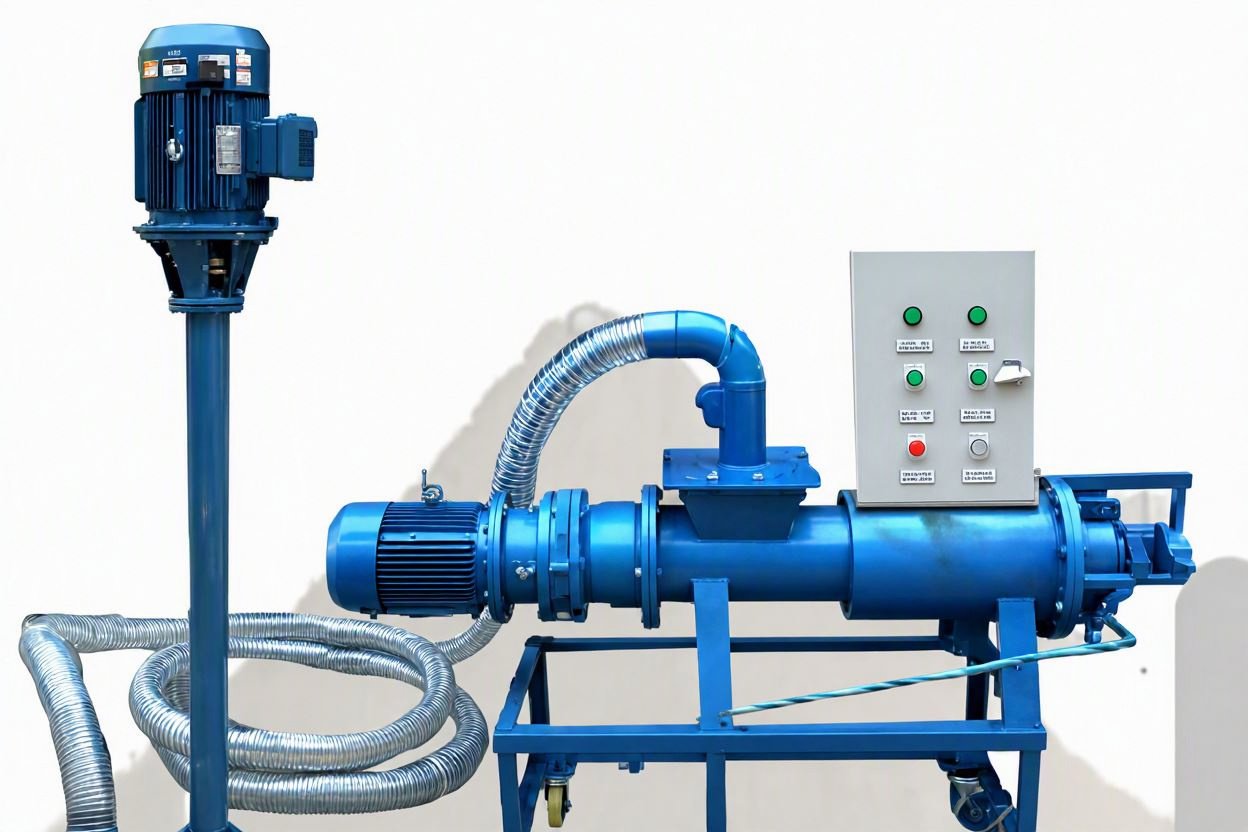
Key Features
- Efficient separation of solid and liquid fractions from manure and slurry.
- Designed for agricultural and biogas waste-management applications.
- Available in screw-press and screen-based configurations.
- Durable construction for demanding operating conditions.
- Helps reduce the volume of liquid waste requiring further handling.
- Produces separated solids for composting or other suitable uses.
- Supports liquid collection and downstream treatment.
- Available in different capacities to suit small, medium, and large operations.
Functions
- Separates solid materials from livestock manure.
- Processes slurry from anaerobic digesters and biogas plants.
- Reduces suspended solids in the separated liquid fraction.
- Produces a solid fraction suitable for composting or further processing.
- Helps prepare liquid manure for storage, treatment, or irrigation where appropriate.
- Supports organic waste management and nutrient recovery.
Benefits
- Improved Waste Management: Makes manure easier to handle, transport, and process.
- Reduced Storage Requirements: Can reduce the volume of liquid slurry requiring storage, depending on the feed material and separation efficiency.
- Organic Fertiliser Production: Provides a solid fraction that can be composted or processed into soil amendments.
- Digestate Management: Supports the handling and processing of digestate from biogas plants.
- Reduced Handling Costs: May lower transportation and handling costs by separating the solid and liquid fractions.
- Cleaner Operations: Helps organise manure processing and improve waste-handling practices.
- Resource Recovery: Supports the reuse of organic matter and nutrients in agriculture.
- Versatile Applications: Suitable for livestock farms, biogas facilities, and selected wastewater treatment operations.
Typical Applications
- Dairy and cattle farms.
- Pig and poultry farms.
- Agricultural biogas plants.
- Anaerobic digestion facilities.
- Organic fertiliser production.
- Manure storage and treatment systems.
- Wastewater and organic slurry treatment facilities.
Installation and Maintenance
- Install the separator on a stable surface with adequate drainage and access for maintenance.
- Ensure the feed slurry is compatible with the machine’s design and solids-handling capacity.
- Use a suitable pump or feeding system where required.
- Clean screens, screw presses, and discharge outlets regularly.
- Inspect the motor, bearings, seals, screens, and screw mechanism for wear.
- Follow the manufacturer’s recommended operating procedures and maintenance schedule.
- Provide appropriate electrical protection and safe access to moving parts.
- Handle separated liquids and solids in accordance with applicable environmental and agricultural requirements.
Important Product Information
Separation performance depends on manure type, solids concentration, particle size, feed rate, and machine design. A mechanical separator does not necessarily remove dissolved nutrients, pathogens, or all fine suspended solids. Additional treatment may be required before the liquid fraction is discharged, reused, or applied to land.
Before purchasing, confirm the processing capacity, motor power, voltage, separation technology, screen size, moisture content of the separated solids, and expected separation efficiency with the supplier.
Reviews
There are no reviews yet.