
Key Features
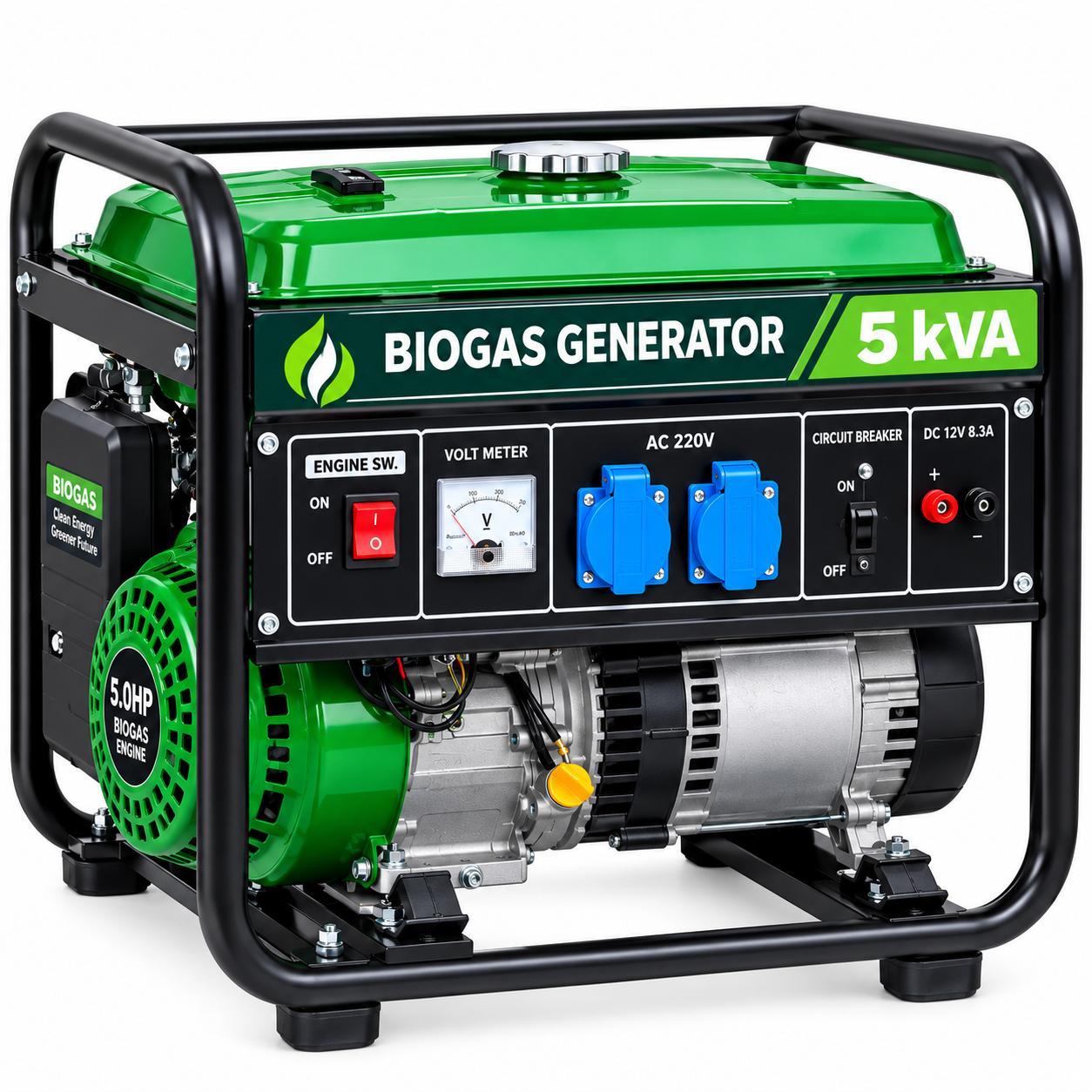
- 5 kVA Rated Capacity: Designed to provide electrical power for suitable domestic, agricultural, and small commercial applications.
- Biogas-Powered Engine: Uses biogas as fuel to drive the generator’s engine.
- Electrical Alternator: Converts the engine’s mechanical energy into electrical energy.
- Renewable Energy Source: Can operate on biogas produced from livestock manure, food waste, and other biodegradable materials.
- Practical Power Supply: Suitable for selected lighting systems, small electrical appliances, and farm equipment within its rated capacity.
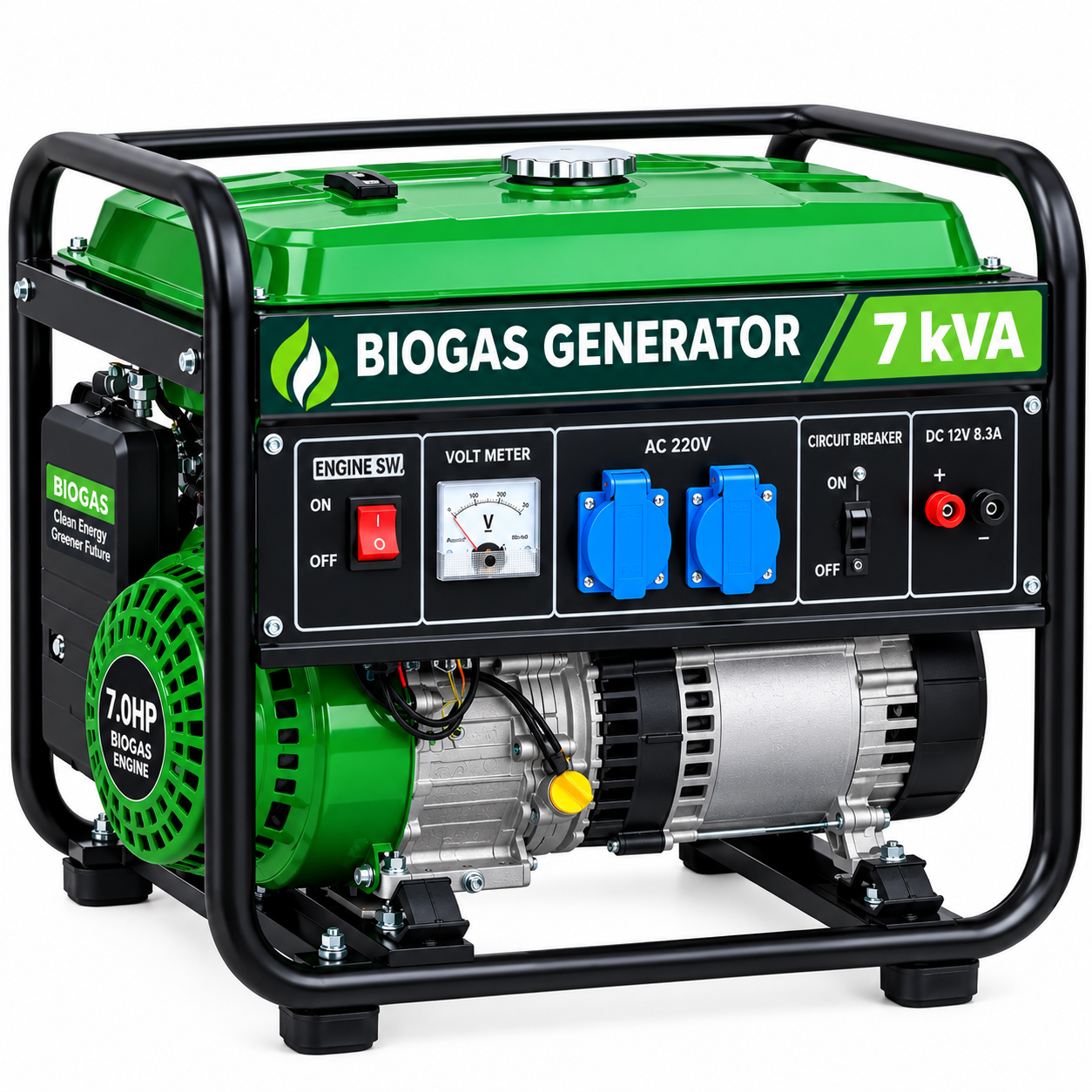
- Control Panel: Depending on the model, the control panel may display voltage, current, frequency, operating hours, and fault indicators.
- Electric or Manual Starting: Starting arrangements vary by model.
- Single-Phase or Three-Phase Options: Available configurations depend on the manufacturer and model.
- Cooling System: May use air cooling or water cooling, depending on the generator design.
- Potential Fuel Cost Savings: Can reduce reliance on conventional generator fuels when biogas is available at a suitable cost.
Functions
Electricity Generation
Converts energy stored in biogas into electrical power for operating compatible equipment and appliances.
Domestic Power Supply
Can supply electricity for lighting, televisions, computers, phone chargers, and other appropriately sized household loads.
Agricultural Power Supply
Can support selected farm operations, including small water pumps, depending on their electrical ratings and starting requirements.
Business Operations
Provides an alternative source of electricity for small businesses, workshops, and other facilities with compatible electrical loads.
Biogas Utilisation
Makes productive use of biogas generated from organic waste, integrating waste management with renewable electricity production.
Backup Power
Can serve as a backup electricity source when the main supply is unavailable, provided the installation includes suitable switching and electrical protection.
Benefits
Reduces Dependence on Conventional Fuels
Using biogas instead of petrol or diesel can reduce expenditure on purchased generator fuel when sufficient biogas is produced on-site.
Converts Organic Waste into Electricity
The generator allows farms and businesses to turn biogas produced from organic waste into useful electrical energy.
Supports Rural Electrification
It can provide electricity to farms and rural properties where grid access is limited or unreliable.
Helps Reduce Energy Costs
For users with an established digester and a consistent supply of suitable biogas, the generator can reduce electricity expenses. Actual savings depend on gas production, maintenance, and operating costs.
Multiple Applications
The generated electricity can support various compatible appliances and equipment within the generator’s rated capacity.
Supports Renewable Energy Adoption
Biogas electricity generation can contribute to a more sustainable energy system when the biogas is produced and managed responsibly.
Integrates with Existing Biogas Systems
The generator can be incorporated into a biogas installation designed to supply gas for electricity generation, provided gas treatment, pressure, flow, and storage meet the manufacturer’s requirements.
Typical Applications
The 5 kVA biogas generator may be suitable for:
- Livestock and dairy farms
- Poultry farms
- Rural homes and homesteads
- Small businesses and workshops
- Agricultural training centres
- Small irrigation and water-pumping operations
- Eco-lodges and selected hospitality facilities
- Biogas demonstration projects
- Backup electricity systems
Suitability depends on the electrical loads, gas supply, and generator configuration.
How It Works
Step 1: Biogas Production
Organic waste, such as livestock manure or food waste, decomposes inside an anaerobic digester, producing biogas.
Step 2: Gas Treatment
The gas is treated as required to remove excess moisture and reduce hydrogen sulphide and other contaminants that could damage the engine.
Step 3: Gas Supply
Biogas is delivered to the generator at the pressure and flow rate specified by the manufacturer.
Step 4: Engine Combustion
The engine burns the biogas to produce mechanical energy.
Step 5: Electricity Generation
The engine drives an alternator, which converts mechanical energy into electrical power.
Step 6: Power Distribution
The generated electricity passes through the appropriate control and protection equipment before being supplied to compatible appliances or electrical circuits.
10. Short Product Description
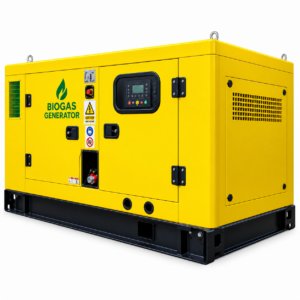
The 5 kVA Biogas Generator converts biogas produced from organic waste into electricity for domestic, agricultural, and small commercial applications. Designed to operate using renewable biogas, it can power compatible lighting systems, appliances, and selected farm equipment. Ideal for farms, rural homes, and businesses with a reliable biogas supply, it offers an alternative to conventional fuel-powered generators while supporting productive organic waste management.
11. SEO Content
SEO Title: 5 kVA Biogas Generator in Kenya | Home Biogas Kenya
Meta Description: Explore the 5 kVA biogas generator from Home Biogas Kenya for renewable electricity generation using biogas produced from organic waste.
Primary Keyword: 5 kVA biogas generator

Reviews
There are no reviews yet.